Programme

Seven pedagogical courses over three days, designed for beginning PhD students and postdocs.

1–3 March 2027 · INL, Braga

Schedule

Monday 1 March

  • 09:00–10:30Spintronics ITomáš Jungwirth
  • 10:30–11:00Coffee break
  • 11:00–12:30Spintronics IITomáš Jungwirth
  • 12:30–14:30Welcome lunch and table introductions
  • 14:30–16:00Orbital physics IPaul M. Haney
  • 16:00–16:30Coffee break
  • 16:30–17:30Orbital magnetism and Berry phaseDi Xiao

Tuesday 2 March

  • 09:00–10:30Orbital physics IIPaul M. Haney
  • 10:30–11:00Coffee break
  • 11:00–12:30Orbital transport IHyun-Woo Lee
  • 12:30–14:30Lunch
  • 14:30–16:00Orbital transport IIHyun-Woo Lee
  • 16:00Poster session and happy hour

Wednesday 3 March

  • 09:00–10:30Orbital conversion and torqueKyung-Jin Lee
  • 10:30–11:00Coffee break
  • 11:00–12:30Experimental orbitronicsPietro Gambardella
  • 12:30–14:00Lunch
  • 14:00–16:30AI-assisted research and scientific agentsCamilo Chacon
  • 16:30End of school

Courses and lecturers

01

Spintronics

Monday 1 March, 09:00 and 11:00
2 sessions · 3 h
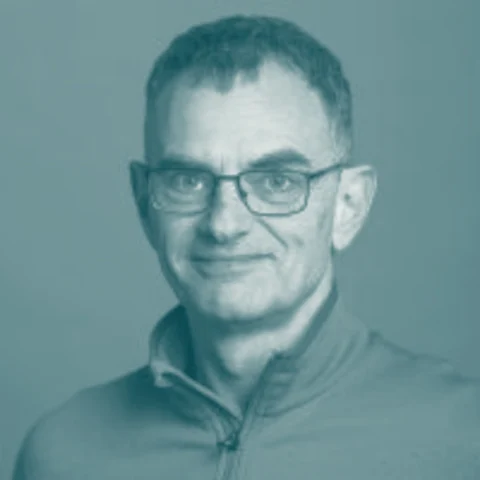
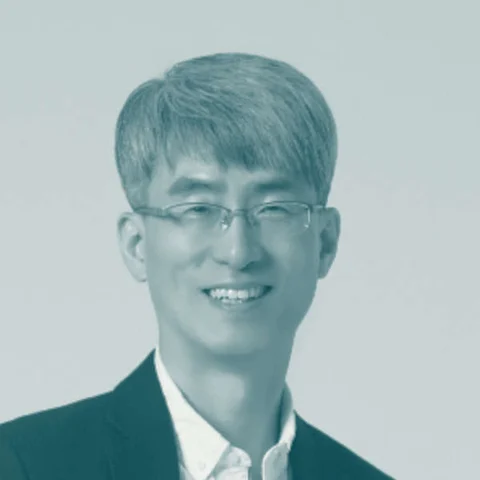
Tomáš JungwirthHead of the Department of Spintronics and Nanoelectronics, Institute of Physics of the Czech Academy of Sciences

Tomáš Jungwirth is a leading figure in spintronics, widely known for pioneering contributions to relativistic and antiferromagnetic spintronics. His work has opened new routes for using magnetic order, crystal symmetry and spin–orbit coupling in information technologies. More recently, he has also helped shape the emerging physics of altermagnetism, linking fundamental symmetry concepts with ultrafast and energy-efficient electronic devices.
02

Orbital physics

Monday 1 March, 14:30
Tuesday 2 March, 09:00
2 sessions · 3 h
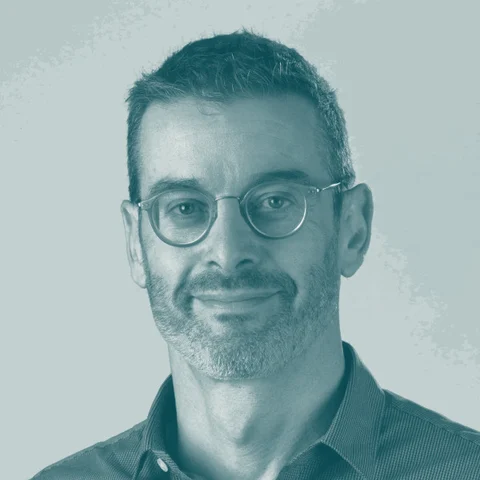
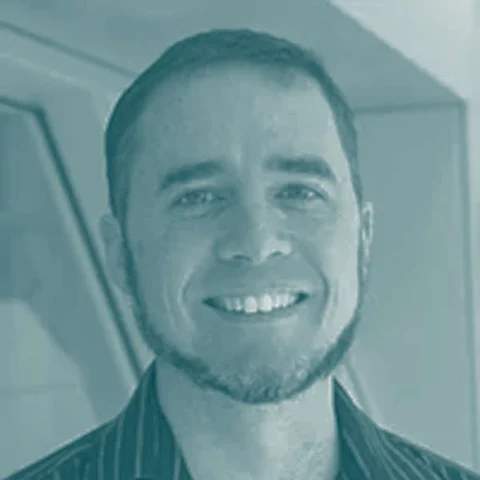
Paul M. HaneyProject Leader, Quantum Nanoelectronics Group, National Institute of Standards and Technology (NIST), USA

Paul Haney is a distinguished theorist whose work has provided important foundations for the understanding of spin–orbit torques and spin transport in magnetic heterostructures. His research also addresses orbital transport and orbital angular-momentum phenomena, combining analytical insight and computational methods to investigate the interplay of spin, orbital degrees of freedom and topology in condensed-matter systems.

03

Orbital transport

Tuesday 2 March, 11:00 and 14:30
2 sessions · 3 h
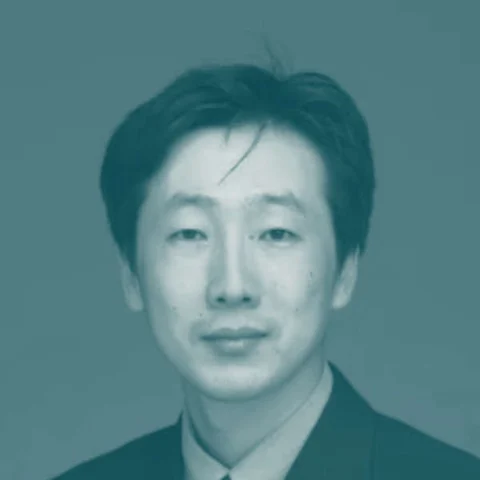
Hyun-Woo LeeProfessor, Department of Physics, POSTECH, South Korea

Hyun-Woo Lee is an internationally recognized theorist in spintronics and orbitronics. His research has made influential contributions to spin and orbital Hall effects, spin–orbit torques, magnetization dynamics, and current-induced angular-momentum transfer. He has played a central role in clarifying how orbital currents are generated, transported and converted into magnetic torques, helping establish the conceptual foundations of modern orbitronics.

04

Orbital conversion and torque

Wednesday 3 March, 09:00
1 session · 1.5 h
Kyung-Jin LeeKAIST Endowed Chair Professor, Department of Physics, KAIST, South Korea

Kyung-Jin Lee is a leading theorist of spin transport and magnetization dynamics. His work has made important contributions to spin-transfer and spin–orbit torques, magnetic textures, antiferromagnetic spintronics and current-driven magnetic devices. More recently, he has contributed significantly to the development of orbital-torque concepts and to understanding how orbital currents can be converted into efficient magnetic control.

05

Experimental orbitronics

Wednesday 3 March, 11:00
1 session · 1.5 h
Pietro GambardellaFull Professor, Department of Materials, ETH Zürich, Switzerland

Pietro Gambardella is a leading experimentalist in nanomagnetism and spintronics, and heads the Chair of Magnetism and Interface Physics at ETH Zürich. His research explores magnetic interfaces, spin–orbit coupling, chiral magnetic textures and charge–spin conversion in thin-film heterostructures. Through pioneering experiments on spin–orbit torques and magnetic materials, his work has had major impact on both fundamental spintronics and device-oriented research.

06

Orbital magnetism and Berry phase

Monday 1 March, 16:30
Focused lecture · 1 h
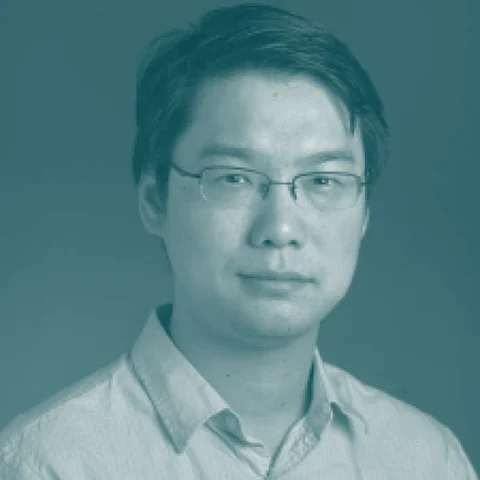
Di XiaoProfessor, University of Washington, and Joint Appointee, Pacific Northwest National Laboratory (PNNL), USA

Di Xiao is a leading theorist in quantum condensed-matter physics whose work has made fundamental contributions to the Berry-phase theory of orbital magnetization and related electronic responses in solids. His research spans topological and magnetic quantum materials, valley physics, two-dimensional van der Waals magnets, and the transport and optical signatures of quantum geometry. His contributions have been especially influential in revealing how orbital magnetism, Berry curvature and topology shape measurable material properties.

07

AI-assisted research and scientific agents

Wednesday 3 March, 14:00
Practical course · 2.5 h
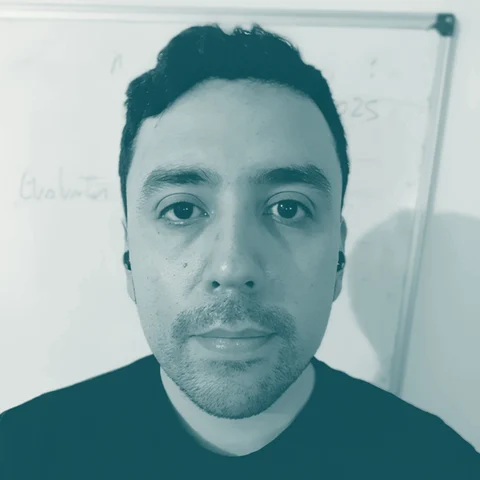
Camilo ChaconApeiron Agents

Camilo Chacon studies the architecture of error: how human and artificial systems fail differently — and what those failures reveal about how each works.

Applications are open from 1 November to 1 December 2026.

Apply now

Acknowledgements

ORBIS — Orbital-based Electronics Orbital Electronics European Innovation Council — Funded by the European Union